
Walk into any home improvement store and you’ll find products labeled “concrete paint” sitting on the same aisle as products labeled “concrete coating” or “floor coating.” The packaging looks similar, the colors are equally appealing, and the price difference isn’t always dramatic — so most homeowners assume they’re looking at different names for the same thing. They’re not.
Concrete paint and concrete coatings are fundamentally different products that bond to concrete differently, perform differently under use, and deliver dramatically different results over time. Understanding the distinction before you buy protects you from one of the most common and frustrating home improvement disappointments: a floor that looked great for three months and started peeling, chipping, or wearing through before the first year was out.
Here’s what separates these two product categories, and how to choose the right one for your project.
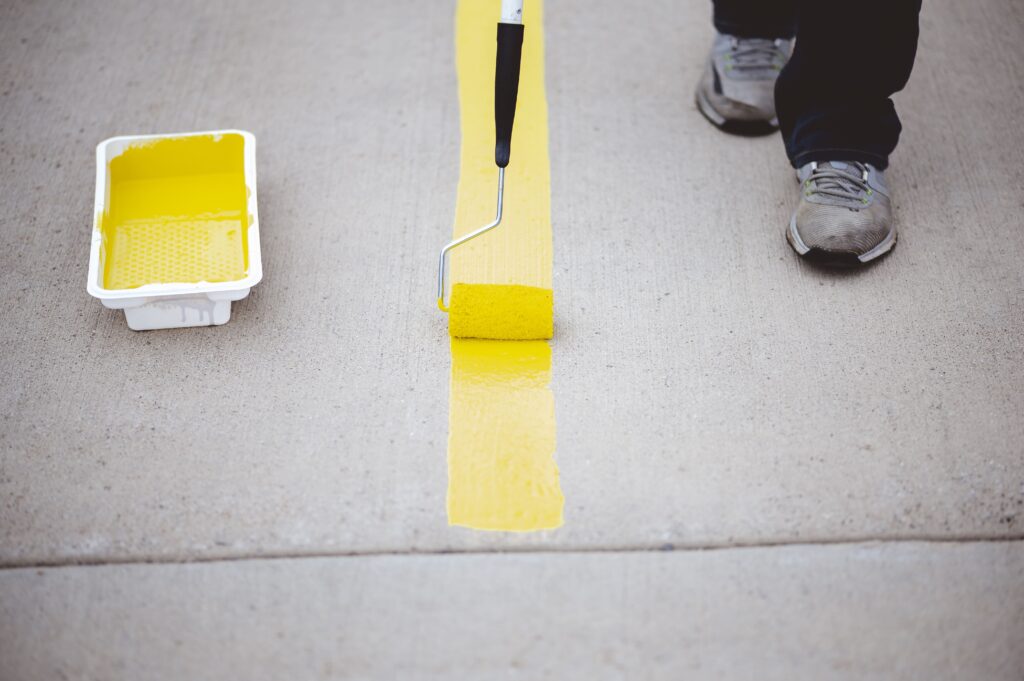
Concrete paint is essentially a latex or acrylic paint reformulated with additives that help it adhere to masonry surfaces. It applies just like wall paint — roller, brush, or sprayer — dries to a film on top of the concrete surface, and provides color and a degree of moisture resistance.
The operative phrase is “film on top of.” Concrete paint does not chemically bond to or penetrate deeply into the concrete substrate. It sits on the surface, held in place by mechanical adhesion between the paint film and the concrete’s texture. This surface-level bond is the defining limitation of concrete paint, and it’s why concrete paint consistently underperforms when used in demanding applications.
Where concrete paint works reasonably well:
Where concrete paint consistently fails:
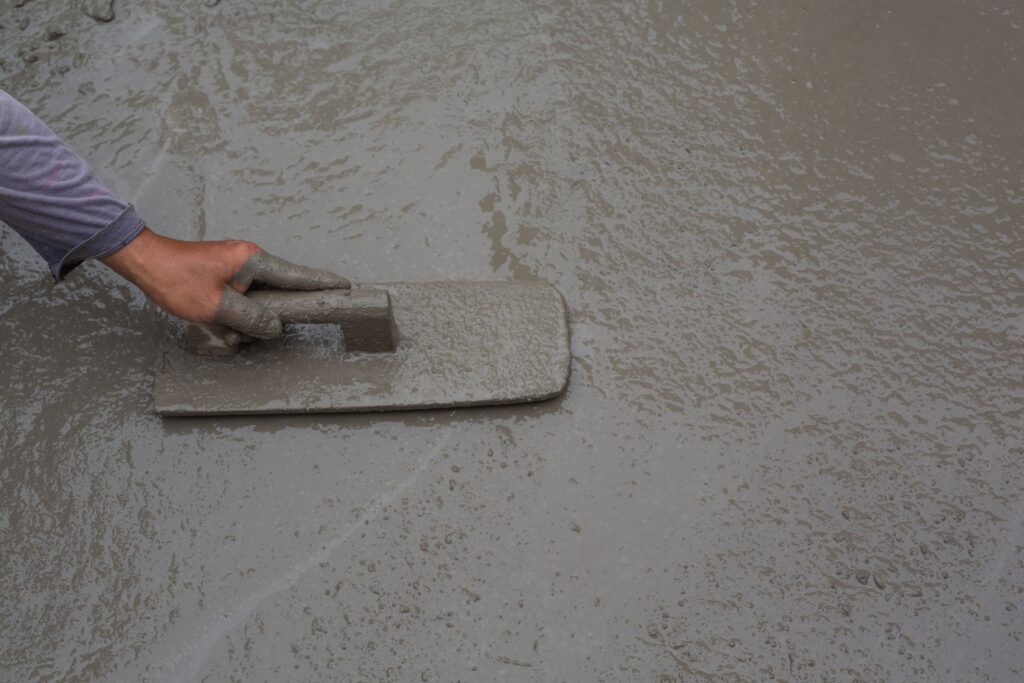
Concrete coatings are a broader and more technically sophisticated product category that includes epoxy, polyurea, polyaspartic, and polyurethane systems. What distinguishes coatings from paint isn’t just marketing — it’s chemistry, thickness, bond mechanism, and the cured physical properties of the finished product.
Quality concrete coatings chemically react with the prepared concrete surface rather than simply adhering to it as a film. The coating penetrates the concrete’s pore structure and forms a molecular bond with the substrate, creating an integrated surface rather than a layer sitting on top of it. The result is dramatically superior adhesion, hardness, chemical resistance, and longevity compared to any paint-based product.
Coatings are also significantly thicker than paint. Where a coat of concrete paint might be 2 to 4 mils thick (a mil is one-thousandth of an inch), a professional multi-layer epoxy or polyaspartic coating system typically builds to 20 to 30 mils or more. That thickness contributes directly to impact resistance, durability, and the film’s ability to bridge minor surface imperfections.
Epoxy coatings are the most widely recognized concrete coating in residential applications. Two-component systems (a resin and a hardener mixed immediately before application) create a chemical reaction that cures into an extremely hard, rigid surface with excellent adhesion and chemical resistance. Epoxy is an excellent foundation layer in multi-coat systems.
Limitations of epoxy: it is UV-reactive, meaning direct sunlight causes the cured film to yellow and chalk over time — making it better suited to interior applications or as a base coat beneath a UV-stable topcoat. Epoxy is also more brittle than polyurea and polyaspartic alternatives, and can be susceptible to hot tire pickup if used as a standalone system without an appropriate topcoat.
Polyurea and polyaspartic coatings represent the current premium tier of residential floor coating systems. Both are two-component systems that cure to a more flexible film than epoxy — meaning they absorb impact without cracking — and both are UV-stable, resisting yellowing and chalking even in direct sun exposure. Polyaspartic in particular cures rapidly, allowing single-day installations, and is highly resistant to hot tire pickup, abrasion, and chemical exposure.
Most professional floor coating systems today use a layered approach that combines the strengths of multiple products: an epoxy base coat for maximum adhesion and chemical bonding to the concrete, a broadcast layer of decorative color flake applied into the wet base for texture and aesthetics, and a polyaspartic or polyurea topcoat for UV stability, surface hardness, and protection. This system outperforms any single-product application across every performance category.
Polyurethane coatings are used primarily as topcoats over epoxy base systems. They offer good UV resistance and surface hardness but are less commonly specified as standalone residential floor coatings than polyaspartic.
One of the clearest practical differences between concrete paint and professional coatings is the surface preparation each requires — and what that preparation reveals about how each product bonds to concrete.
Concrete paint can be applied over a cleaned, dry concrete surface with minimal preparation. This is one of the product’s appeals from a DIY standpoint. The problem is that minimal preparation leaves intact the surface laitance — a weak, dusty layer of fine cement particles at the top of the concrete — that prevents strong adhesion. Paint applied to unlaitanced concrete is only as strong as that weak top layer, which is why paint peels when it’s subjected to stress.
Professional concrete coatings require mechanical surface preparation — typically diamond grinding or shot blasting — that physically removes the laitance layer and opens the concrete’s pore structure. This creates a surface profile (measured in CSP — Concrete Surface Profile — units) that the coating can penetrate and chemically bond to. The preparation step is non-negotiable for coating performance, which is why professional installation consistently outperforms DIY application even when the same products are used.
Moisture testing is also part of proper surface preparation for coatings. Concrete transmits moisture vapor upward from below (vapor emission), and coatings applied over concrete with excessive moisture vapor emission will delaminate as the vapor pressure lifts the film from the substrate. Professional installers test moisture vapor emission rates before applying any coating and use moisture-mitigating primers when needed. This step is almost never performed in paint applications.
The performance gap between concrete paint and quality coatings under real-world conditions is substantial and becomes apparent quickly.
Concrete paint on a garage floor: In typical residential use with one or two vehicles, garage floor paint begins showing wear within three to twelve months. Tire marks, scuff marks from foot traffic, staining from oil and fluid drips, and peeling at high-stress areas like the apron near the door are the most common early failure signs. Most garage floor paint jobs require reapplication within one to three years to maintain acceptable appearance.
Professional coating system on a garage floor: A properly installed polyaspartic or polyurea-topcoated epoxy system on a mechanically prepared substrate typically carries a manufacturer warranty of fifteen years or more and realistically performs for twenty-plus years with normal maintenance. The surface resists hot tire pickup, is impervious to oil, gasoline, and most automotive fluids, cleans with a mop and mild detergent, and retains its appearance and integrity through years of daily use.
The cost difference between paint and a professional coating is real — professional systems cost more upfront. But when that cost is divided by actual service life, professional coatings typically deliver a lower cost per year than paint systems that require frequent reapplication.
Between the extremes of basic concrete paint and professional multi-layer coating systems, the market has expanded to include consumer-grade coating products — water-based epoxy kits, single-component polyurea products, and hybrid systems available at home improvement retailers and online.
These products occupy genuine middle ground: they perform substantially better than paint in most applications, but they also have meaningful limitations compared to professional-grade systems.
What DIY coatings offer:
Where DIY coatings fall short of professional systems:
DIY coating products can be a reasonable choice for lower-traffic applications — utility rooms, workshops, basement floors — where the demands on the coating are moderate and the budget doesn’t support professional installation. For garage floors that see daily vehicle traffic, or for any application where long-term performance is the priority, professional-grade systems installed by an experienced contractor consistently deliver better results.
Choose concrete paint when:
Choose a DIY coating product when:
Choose a professional coating system when:
If you’re moving forward with professional installation, the quality of the contractor matters as much as the quality of the products. Before signing a contract, ask:
Concrete paint and concrete coatings are not the same product with different labels — they are different technologies that deliver fundamentally different results. Concrete paint is an accessible, low-cost option for applications where surface-level adhesion and modest durability are acceptable. Concrete coatings — particularly professional multi-layer epoxy and polyaspartic systems — are engineered for chemically bonded, high-performance surfaces that withstand the demands of real-world use for years or decades.
Choosing between them comes down to understanding what the surface will actually be asked to do, how long you need it to perform, and what the true cost of reapplication and repair looks like over that timeframe. For most floor applications where durability and long-term value are the goal, concrete coatings deliver a return on investment that concrete paint simply can’t match.